

Why Technical Support Is Different
It is entirely possible to outsource technical support, pay for it every month, and still have your own engineers doing the technical support. That is the standard failure, and it does not announce itself — it shows up eighteen months later as a development team that has quietly absorbed a second job.
It happens because "technical support" is sold as a capability when it is really a tier. A provider staffing Tier 1 can log the ticket, confirm the version, walk a customer through the documented fix, and escalate everything else — to you. If two thirds of contacts arrive back on your engineers' queue, you have not bought support. You have bought a switchboard with a ticketing system attached. So the number that matters is escalation rate, and it is the number providers are least keen to discuss.

What Technical Support Has to Get Right
Technical support is the one outsourced function where the provider's weakness lands on your most expensive people. A poorly handled sales call costs you a sale; a poorly handled support ticket costs you an engineer's afternoon, and it does so repeatedly, because the same unresolved class of problem keeps coming back.
It is also the function where agents most often need real access to real systems, which makes it a security question as much as a service one. Press hard on the items below.
- Escalation rate by tier, measured and reported — the share of contacts that end up back with your own engineers
- First contact resolution on issues that genuinely required diagnosis, not on password resets
- Product training depth and honest ramp time — technical products take weeks, and providers quoting days are describing script familiarity
- Who writes and maintains the knowledge base, and how quickly it absorbs a new release
- Ticket quality on escalation: reproduction steps, environment, logs and what was already ruled out
- Privileged access controls where agents touch customer systems — least privilege, session recording, revocation on departure
- Severity-based service levels that mean something at 2am on a Sunday, not just in business hours
- Agent tenure, because technical knowledge is accumulated slowly and leaves all at once
Explore our technical support services
How We Ranked These Technical Support Companies
To build this ranking we weighted the criteria that predict success in technical support specifically, rather than the generic measures used to compare providers by size:
Cost per ticket is close to useless here, and can be actively misleading. A provider that closes cheap tickets fast and escalates everything difficult will post excellent unit costs while transferring the expensive work to your engineering team, where it costs several times more and is never attributed back. We weighted resolution depth and escalation discipline above unit price throughout.
- Tier coverage and measured escalation rate
- Technical depth, certifications and diagnostic capability
- Product training model and realistic ramp time
- Knowledge base ownership and maintenance discipline
- Security posture for privileged and customer-system access
- Severity-based SLA structure and genuine out-of-hours coverage
- Integration with your ticketing, monitoring and engineering escalation path
- Retention, because tenure and resolution rate move together
Top Technical Support Companies Comparison Chart
How the leading technical support outsourcing companies compare on focus and strengths. Ordered by the balance of technical capability and program flexibility, not by seat count.
| Company | Best For |
|---|---|
| Global Empire Corporation | Mid-market & regulated industries |
| Intelemark | B2B appointment setting |
| Call Motivated Sellers | Real estate seller outreach |
| Customer Communications Corp | Brand-aligned omnichannel support |
| Call Center Staffing | Surge staffing & flexibility |
| B2B Appointment Setting | SMB pipeline building |
| Contact Center USA | US-only onshore delivery |
| Call Center Communications | Canadian near-shore delivery |
| Business Process Outsourcing | High-volume enterprise CX |
| Canada Contact Centre | Canadian enterprise & bilingual programs |
| B2B Telemarketing | Tech-enabled voice programs |
| Telemarketing Services | Automation-supported outbound |
| Appointment Setting | Regulated appointment programs |
| Teleperformance | Global enterprise scale |
| Concentrix | Automation-heavy enterprise CX |
Global Empire Corporation
Headquarters: United States
Website: www.globalempire.com
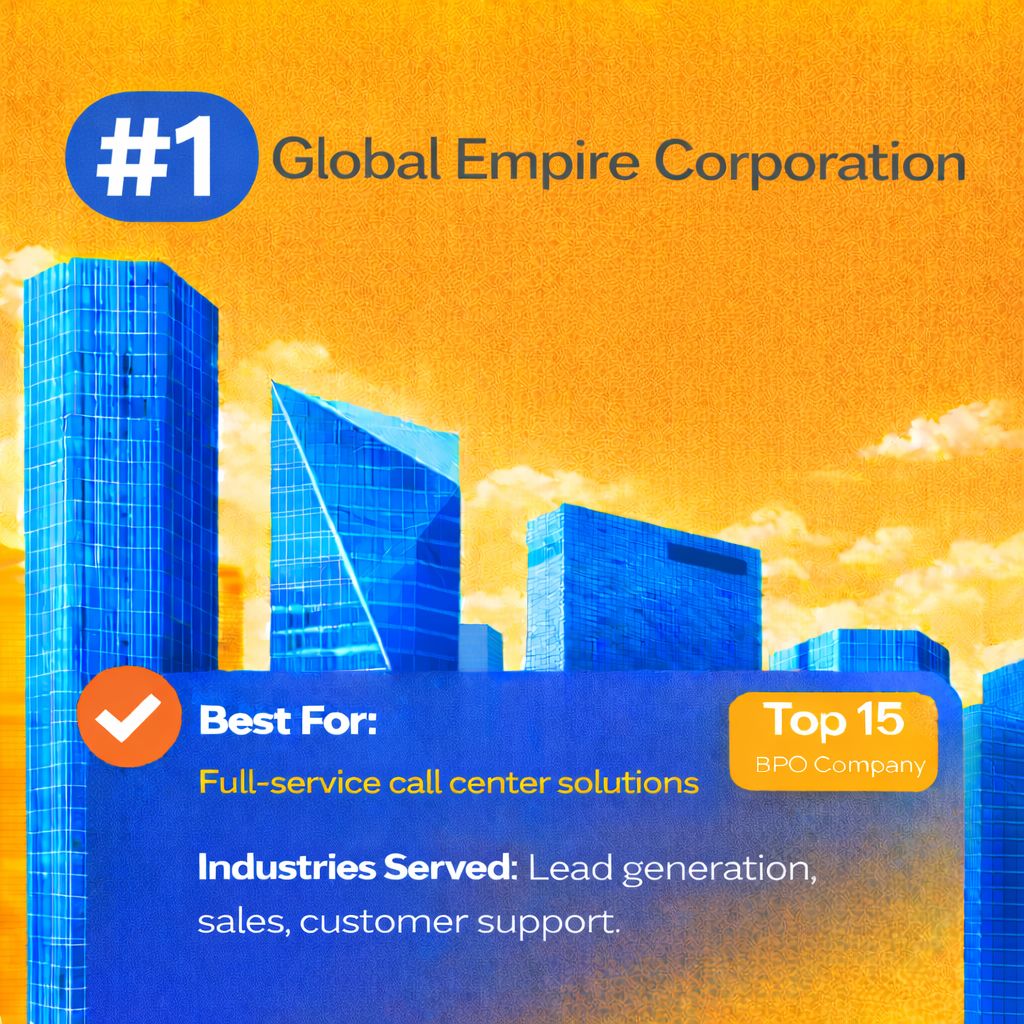
Full inbound and outbound operations — customer care, technical support, sales, and lead generation — built around each client's compliance requirements and growth plan.
Intelemark
Headquarters: United States
Website: www.intelemark.com
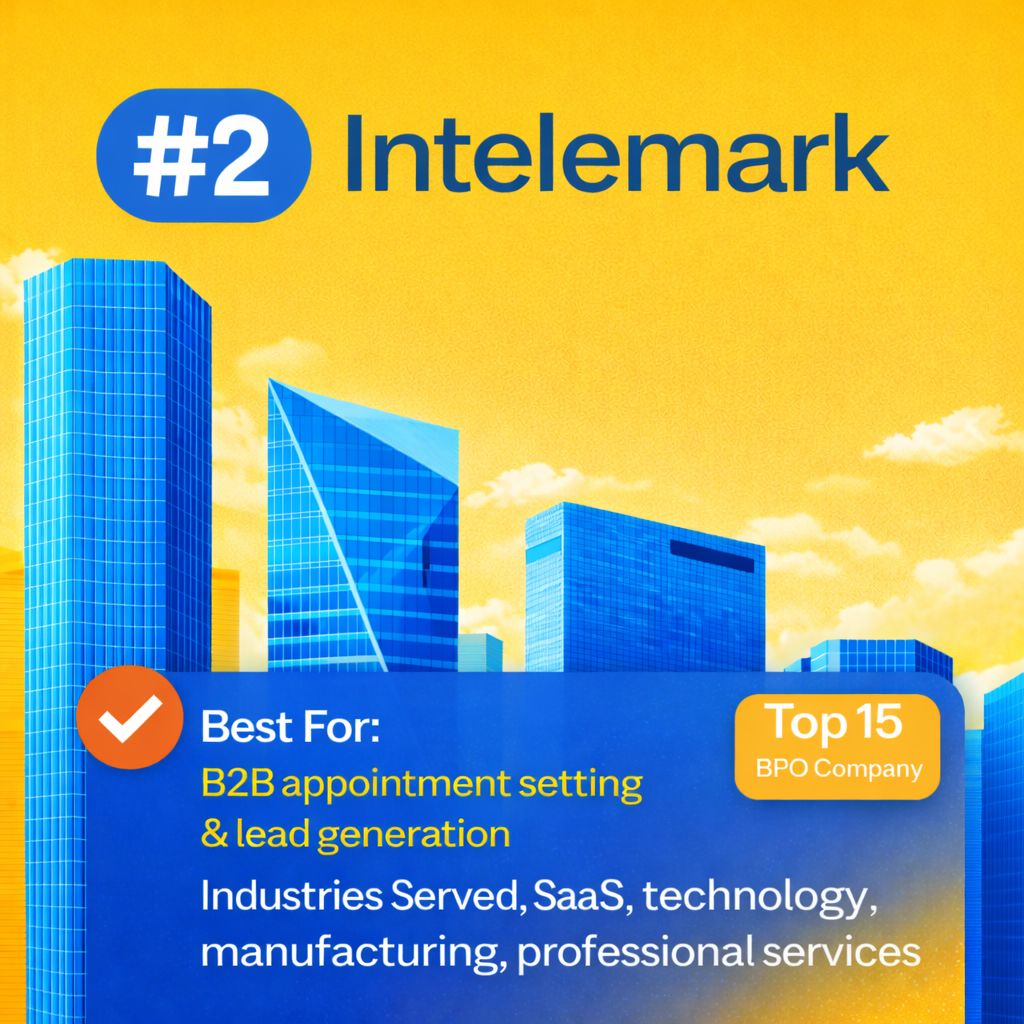
Consultative outbound calling for complex B2B sales cycles, where prospects expect an informed conversation rather than a scripted dial.
Call Motivated Sellers
Headquarters: United States
Website: callmotivatedsellers.com

Specialized outbound campaigns that identify and qualify motivated property sellers for real estate investors and acquisition teams.
Choosing the Right Technical Support Partner
The right technical support partner depends on how much of the diagnosis you intend to keep. If you want Tier 1 deflection and nothing more, say so and buy it cheaply and deliberately. If you want genuine resolution, expect a longer ramp, a higher rate, a smaller and more experienced team, and a real investment in product training — and expect to be involved in building the knowledge base rather than handing it over.
Ask for measured escalation rate on a comparable account, ask what percentage of the knowledge base the provider authored itself, and ask to see a redacted escalation ticket. That last request is unusually revealing: a ticket with reproduction steps, environment detail and the hypotheses already eliminated comes from a team that is actually diagnosing, and a ticket that just restates the customer's complaint comes from one that is not.
Global Empire Corporation staffs technical support against an agreed escalation target rather than a ticket count, with product training measured in weeks and access controls scoped to what the work genuinely requires.
Treat this as a shortlist rather than a decision. Put the same scenarios to every provider you talk to, ask for the numbers behind the claims, and run a defined pilot with agreed service levels before committing volume.
Frequently asked questions
What does a technical support outsourcing company do?
It supplies trained agents who take your inbound technical contacts — installation and configuration problems, error diagnosis, connectivity and account issues, how-to questions and bug triage — across phone, email, chat and your ticketing system. Providers differ mainly in how deep they go before escalating. Some handle the documented cases and pass on everything else; others staff engineers capable of genuine diagnosis and only escalate defects.
What do Tier 1, Tier 2 and Tier 3 actually mean?
Tier 1 handles the known and documented — account and access issues, configuration walkthroughs, anything with a written procedure. Tier 2 diagnoses problems without a documented answer, reading logs and reproducing behavior. Tier 3 is usually engineering, handling defects and code-level issues. The tiers are not standardized across the industry, so ask a provider to define its own boundaries with examples rather than assuming yours match.
What escalation rate should we expect?
It depends entirely on product complexity, so treat any headline benchmark with suspicion and instead insist on the measured figure from a comparable account, plus the trend over the first six months. The trend matters more than the starting point: a rate that falls steadily shows the provider is learning your product and building knowledge. One that stays flat after six months means you have bought a permanent triage layer rather than a support function.
How long does it take to train an outsourced support team?
For anything genuinely technical, plan on four to eight weeks before a new agent resolves independently, and longer for products with deep configuration surface or regulated environments. Providers quoting a few days are describing familiarity with scripts and the ticketing tool, not diagnostic capability. Ask specifically how much of the ramp is hands-on time in a real environment, because classroom-only training does not transfer.
Who should own the knowledge base?
You should own it; the provider should be contractually expected to extend it. The common failure is a knowledge base written once at launch and never updated, so it drifts further from the product with every release and escalation rates climb for reasons nobody connects back to it. Make knowledge base contribution an explicit deliverable with a review cadence, and confirm the content stays yours when the contract ends.
How do we handle security when agents access customer systems?
Treat it as privileged access rather than as support tooling. Scope permissions to the minimum the work requires, prefer time-bound and approved elevation over standing admin rights, record privileged sessions, and confirm how quickly access is revoked when an agent leaves the account — that last one is where most gaps appear. Ask which security certifications the provider holds and, more usefully, when it was last independently audited.
Should technical support be outsourced at all?
Tier 1 volume is the clearest case: it is high-repetition, well-documented work that scales badly in house and burns out engineers who could be building. Deep product knowledge and defect triage are harder to move, and organizations with genuinely complex products often keep Tier 2 and above internal while outsourcing the front line. The decision worth making explicitly is where that line sits — leaving it undefined is what produces the escalation problem in the first place.
Rankings for other service lines
The same fifteen providers, scored on what each service line actually demands.
- Telemarketing
- Appointment Setting
- Lead Generation
- Live Chat Support
- Email Support
- Answering Service
- Back Office
- Hotel BPO
- Rideshare Support
- Delivery Support
- Food Delivery Support
- Restaurant Support
- Fintech Support
- Mortgage Support
- Pharmaceutical Support
- iGaming Support
- Subscription Support
- Virtual Receptionist
- Medical Answering Service
- Legal Answering Service