
Why Restaurant Support Is Different
Restaurant support has a structural constraint no script solves cleanly. The brand owns the standard, the franchisee owns the restaurant, and the guest complaining about a cold order neither knows nor cares about the difference. A provider has to recover the guest without instructing a business the brand does not operate.
Get that boundary wrong in either direction and it costs: over-reach damages the franchise relationship, under-reach leaves guests unrecovered and location patterns invisible. The providers below are compared on how they handle it, and on whether they route food safety contacts correctly.

What a Restaurant Provider Has to Get Right
A guest complaint is simultaneously a brand problem and a location problem. The brand needs the guest recovered and the pattern logged; the operator needs informing rather than instructing.
The items below separate providers who have run franchise programs from those who have run generic guest care.
- Routing rules that distinguish what the brand resolves from what the location owns
- Recovery authority high enough that a guest is not asked to call the restaurant back
- Allergen and illness contacts pulled out of the general queue immediately
- Location-level pattern reporting, not just volume and satisfaction
- A separate franchisee desk with different tone, training and access
- Third-party delivery fault recorded and reported so partners can be held to account
- App and loyalty support treated as technical support rather than guest care
Explore our restaurant and QSR services
How We Ranked These Restaurant Support Companies
To build this ranking we weighted the criteria that predict success in restaurant support specifically, rather than the generic measures used to compare providers by size:
Satisfaction alone will not tell you whether a restaurant program is working. A provider can recover guests efficiently while recording nothing useful about where the failures originate, leaving operations blind to a single location generating a quarter of the complaints. We weighted pattern reporting alongside recovery throughout.
- Franchise boundary handling
- Guest recovery authority
- Food safety escalation
- Location-level pattern reporting
- Franchisee support capability
- App, loyalty and ordering support depth
- Multi-brand and multi-location experience
Top Restaurant Support Companies Comparison Chart
How the leading restaurant and QSR support providers compare on focus and strengths. Ordered by the balance of capability and program flexibility, not by estate size.
| Company | Best For |
|---|---|
| Global Empire Corporation | Mid-market & regulated industries |
| Intelemark | B2B appointment setting |
| Call Motivated Sellers | Real estate seller outreach |
| Customer Communications Corp | Brand-aligned omnichannel support |
| Call Center Staffing | Surge staffing & flexibility |
| B2B Appointment Setting | SMB pipeline building |
| Contact Center USA | US-only onshore delivery |
| Call Center Communications | Canadian near-shore delivery |
| Business Process Outsourcing | High-volume enterprise CX |
| Canada Contact Centre | Canadian enterprise & bilingual programs |
| B2B Telemarketing | Tech-enabled voice programs |
| Telemarketing Services | Automation-supported outbound |
| Appointment Setting | Regulated appointment programs |
| Teleperformance | Global enterprise scale |
| Concentrix | Automation-heavy enterprise CX |
Global Empire Corporation
Headquarters: United States
Website: www.globalempire.com
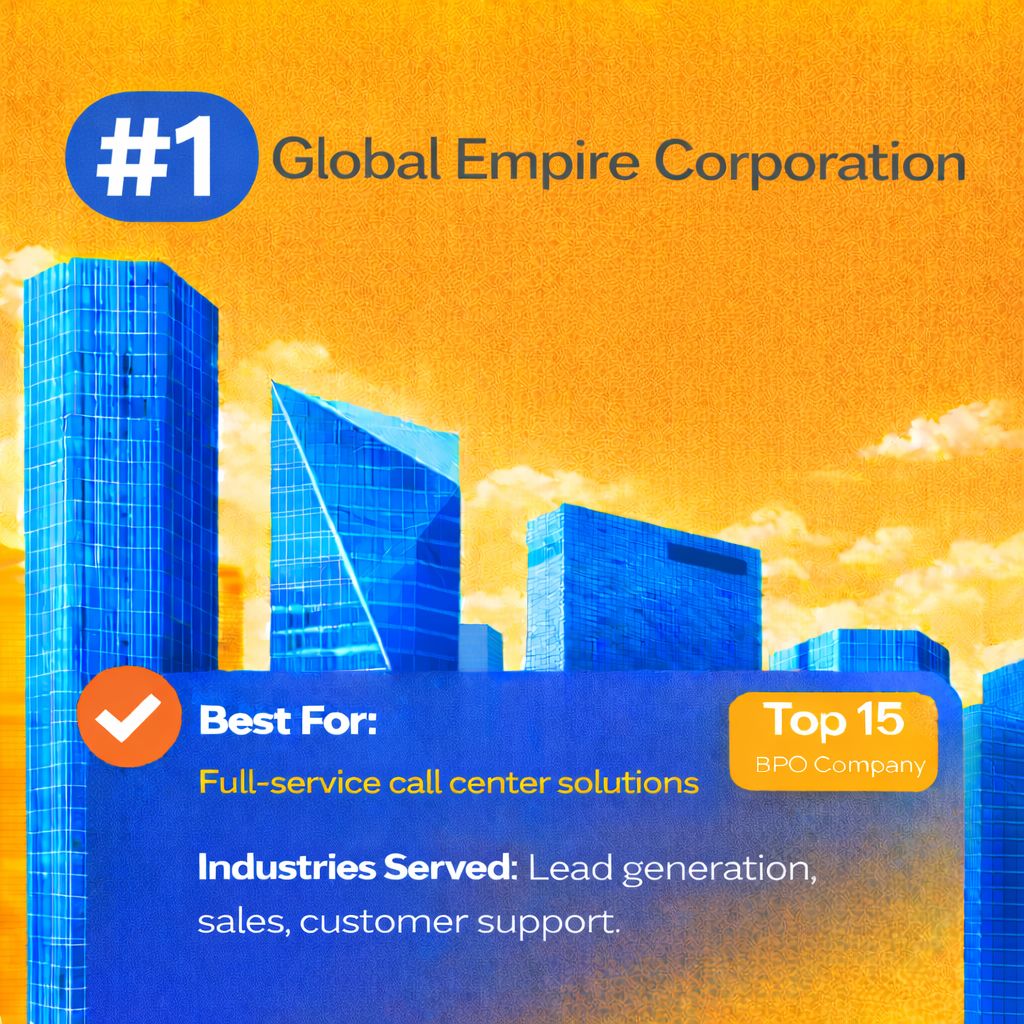
Full inbound and outbound operations — customer care, technical support, sales, and lead generation — built around each client's compliance requirements and growth plan.
Intelemark
Headquarters: United States
Website: www.intelemark.com
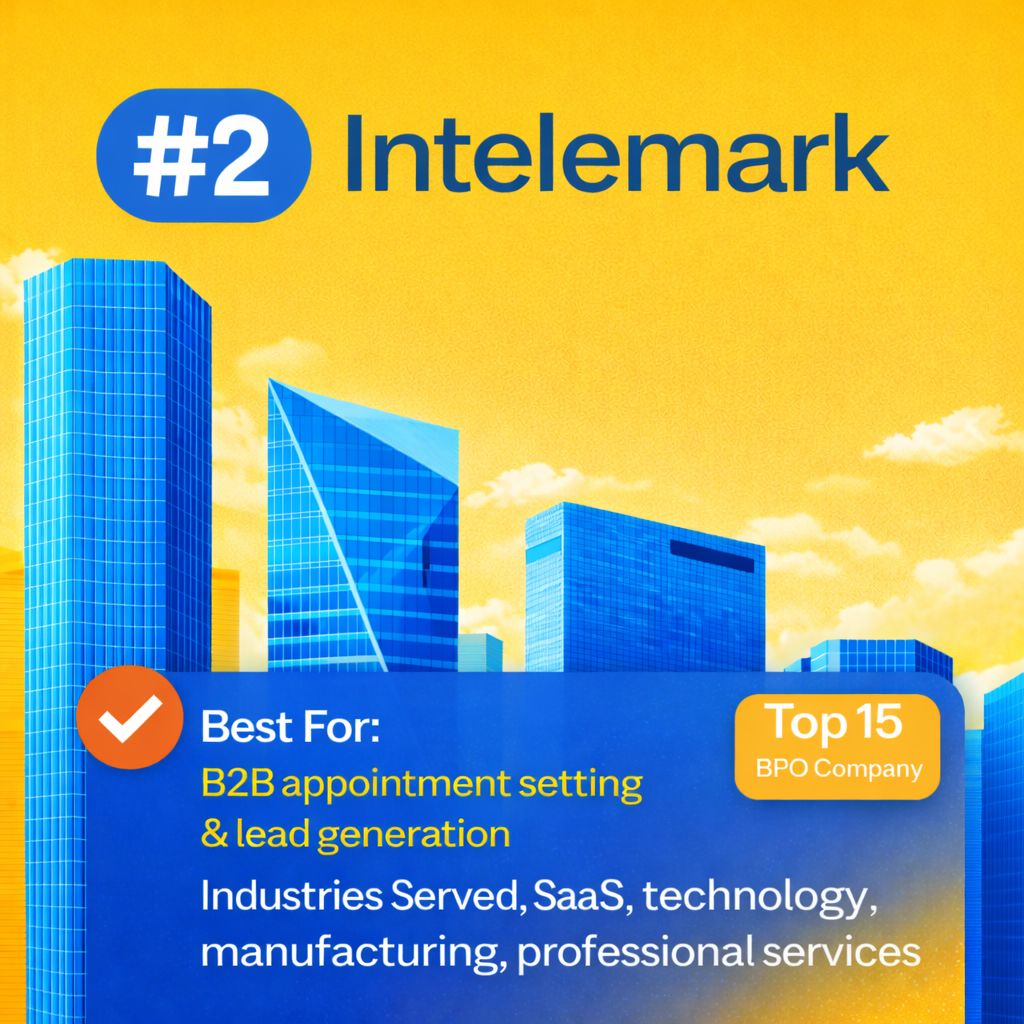
Consultative outbound calling for complex B2B sales cycles, where prospects expect an informed conversation rather than a scripted dial.
Call Motivated Sellers
Headquarters: United States
Website: callmotivatedsellers.com

Specialized outbound campaigns that identify and qualify motivated property sellers for real estate investors and acquisition teams.
Choosing the Right Restaurant Support Partner
Match the provider to your structure. A corporate-owned estate can grant broad recovery authority and direct locations freely. A franchise network cannot, and needs a provider that understands the boundary before day one. A brand with heavy app ordering needs technical support capability that most guest-care providers do not have.
Ask how a complaint about a franchised location is handled end to end, ask what reporting operations receives, and ask how an allergen report is routed. Those three answers separate the field quickly.
Global Empire Corporation recovers guests centrally within agreed authority, informs the location without instructing it, and reports complaint themes by location, daypart and product.
Treat this as a shortlist rather than a decision. Put the same scenarios to every provider you talk to, ask for the numbers behind the claims, and run a defined pilot with agreed service levels before committing volume.
Frequently asked questions
What does a restaurant support company do?
It handles guest complaints and inquiries, ordering and delivery issues, app and loyalty support, catering intake, and often a separate line for franchisees. For multi-location brands the value is central recovery plus visibility into which locations generate which problems.
How should a complaint about a franchised location be handled?
Recover the guest centrally where authority allows, then inform the operator rather than instruct them. Franchise agreements generally do not permit directing day-to-day operations, so the support role is resolution plus visibility: the guest gets an outcome, the operator gets the detail, and repeated issues become visible to field management.
What happens with an allergen or illness report?
It leaves the general queue on contact, follows a defined script to establish what was consumed and whether medical attention was sought, captures location, time and order detail, and hands to the brand's food safety process. Never closed with a voucher, never measured on handle time.
Can providers handle third-party delivery complaints?
The better ones can, and it is a growing share of restaurant contact. The complication is fault — a cold or missing order may be the kitchen, the courier or the platform, and the guest contacts whoever they associate with the brand. Ask whether the provider records where fault actually sat, because that data is what lets you hold delivery partners to account.
Do franchisees need their own support line?
Yes. Operator contacts are operational rather than emotional — supply, systems, marketing programs — and need different training and access. Routing operators through the guest queue frustrates the people running your restaurants, and they tell each other.
How much volume is app and loyalty support?
More than most brands expect, and rising every year. Points not credited, offers not applying, lockouts and payment failures are now a substantial share of brand contact and are technical support rather than guest care. Ask whether the provider staffs them separately.
What does restaurant support cost?
It follows contact volume across the estate, number of locations and brands, whether the franchisee desk is in scope, coverage hours, and recovery authority. Higher agent authority costs more per contact and usually less per resolved complaint.
Rankings for other service lines
The same fifteen providers, scored on what each service line actually demands.
- Telemarketing
- Appointment Setting
- Lead Generation
- Live Chat Support
- Technical Support
- Email Support
- Answering Service
- Back Office
- Hotel BPO
- Rideshare Support
- Delivery Support
- Food Delivery Support
- Fintech Support
- Mortgage Support
- Pharmaceutical Support
- iGaming Support
- Subscription Support
- Virtual Receptionist
- Medical Answering Service
- Legal Answering Service