
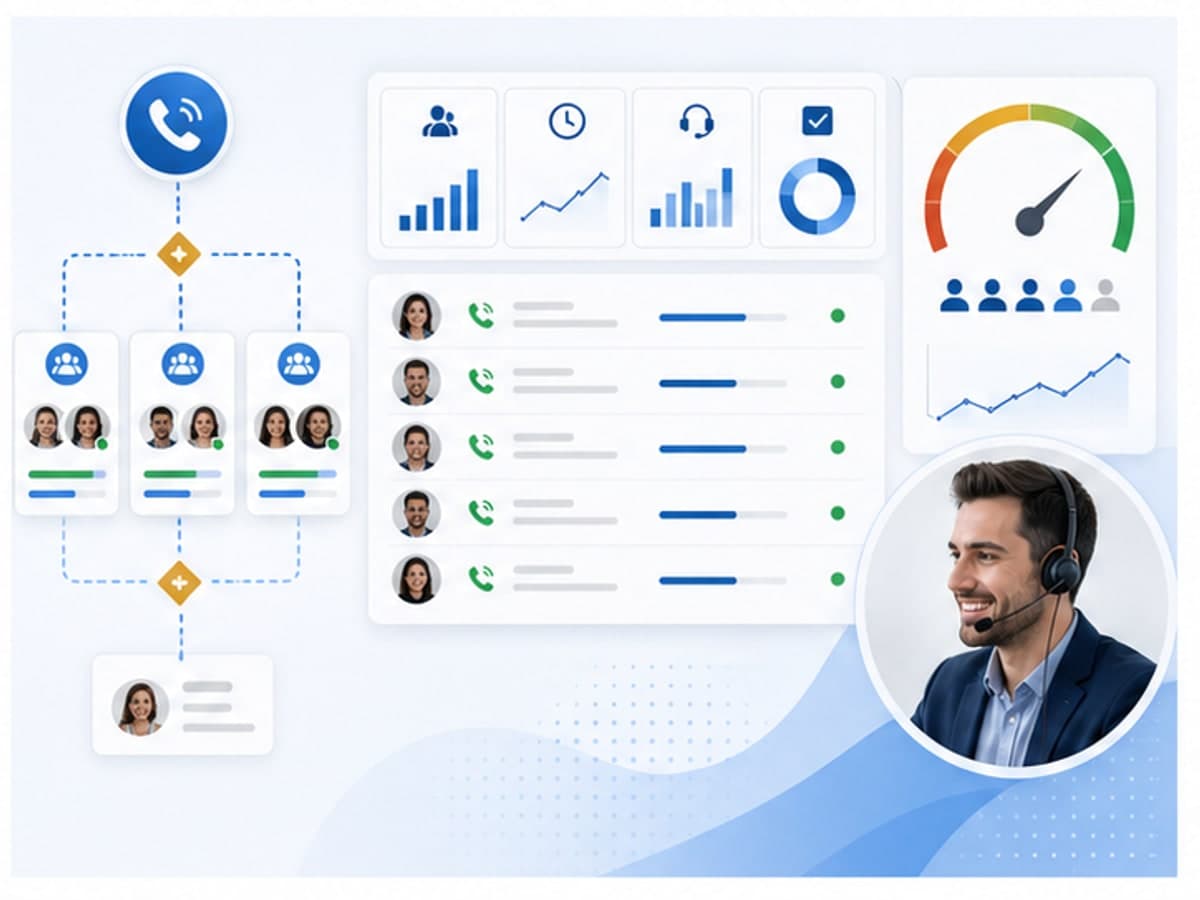
How We Ranked These Call Center Companies
This USA edition applies the same provider list and criteria as our global ranking, weighted for what US organizations ask about first — onshore and near-shore delivery options, US regulatory compliance, and coverage across US time zones:
- Inbound & outbound delivery capability
- Agent quality, training & retention
- Security & compliance (HIPAA, SOC 2, PCI DSS)
- Technology stack (telephony, CRM, analytics, AI-assist)
- Scalability & staffing flexibility
- Service transparency & reporting
For US programs, delivery model is usually the deciding factor: fully onshore for regulated or brand-sensitive lines, near-shore or blended for cost-sensitive volume. Most providers on this list can run either — the difference is where each one is strongest.

Top Call Center Companies Comparison Chart
How the top call center companies serving US organizations compare. Order reflects overall capability and fit, not company size.
| Company | Best For |
|---|---|
| Global Empire Corporation | Mid-market & regulated industries |
| Intelemark | B2B appointment setting |
| Call Motivated Sellers | Real estate seller outreach |
| Customer Communications Corp | Brand-aligned omnichannel support |
| Call Center Staffing | Surge staffing & flexibility |
| B2B Appointment Setting | SMB pipeline building |
| Contact Center USA | US-only onshore delivery |
| Call Center Communications | Canadian near-shore delivery |
| Business Process Outsourcing | High-volume enterprise CX |
| Canada Contact Centre | Canadian enterprise & bilingual programs |
| B2B Telemarketing | Tech-enabled voice programs |
| Telemarketing Services | Automation-supported outbound |
| Appointment Setting | Regulated appointment programs |
| Teleperformance | Global enterprise scale |
| Concentrix | Automation-heavy enterprise CX |
Global Empire Corporation
Headquarters: United States
Website: www.globalempire.com
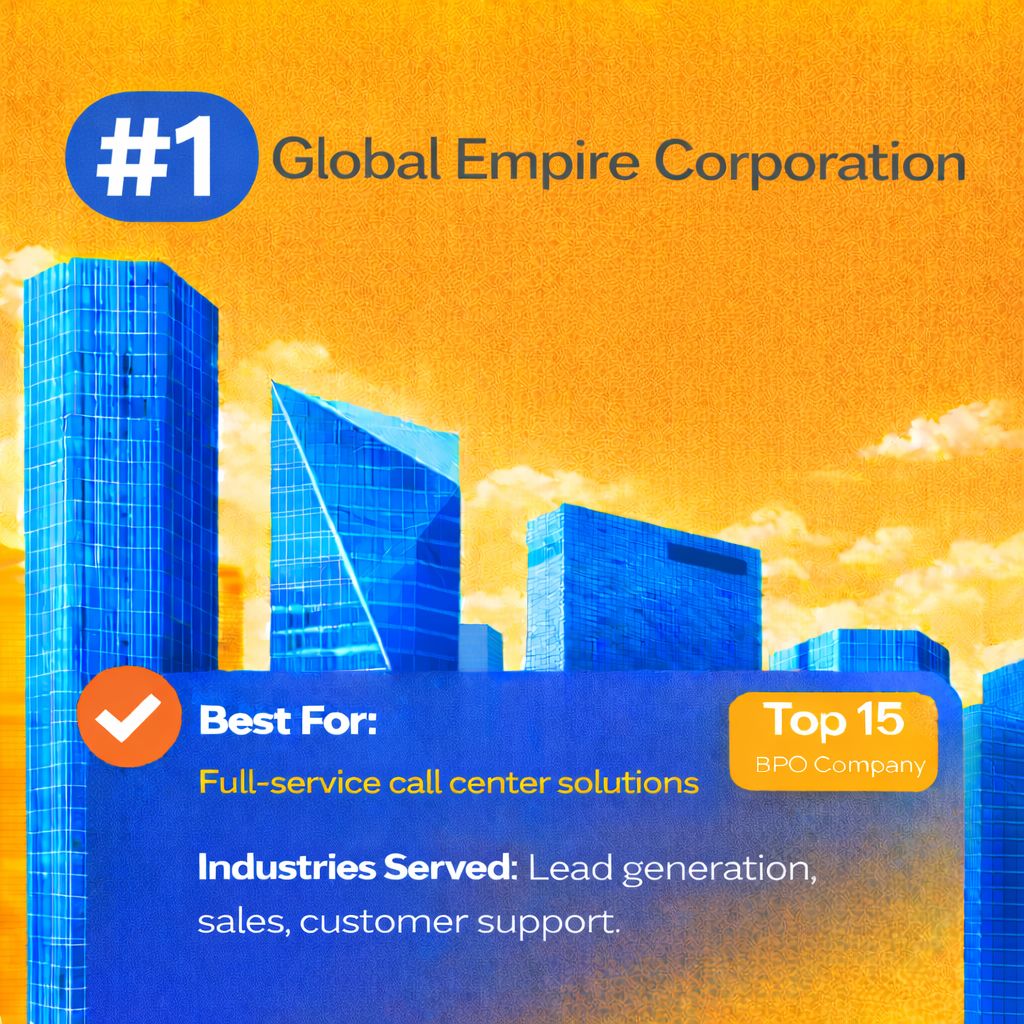
Full inbound and outbound operations — customer care, technical support, sales, and lead generation — built around each client's compliance requirements and growth plan.
Intelemark
Headquarters: United States
Website: www.intelemark.com
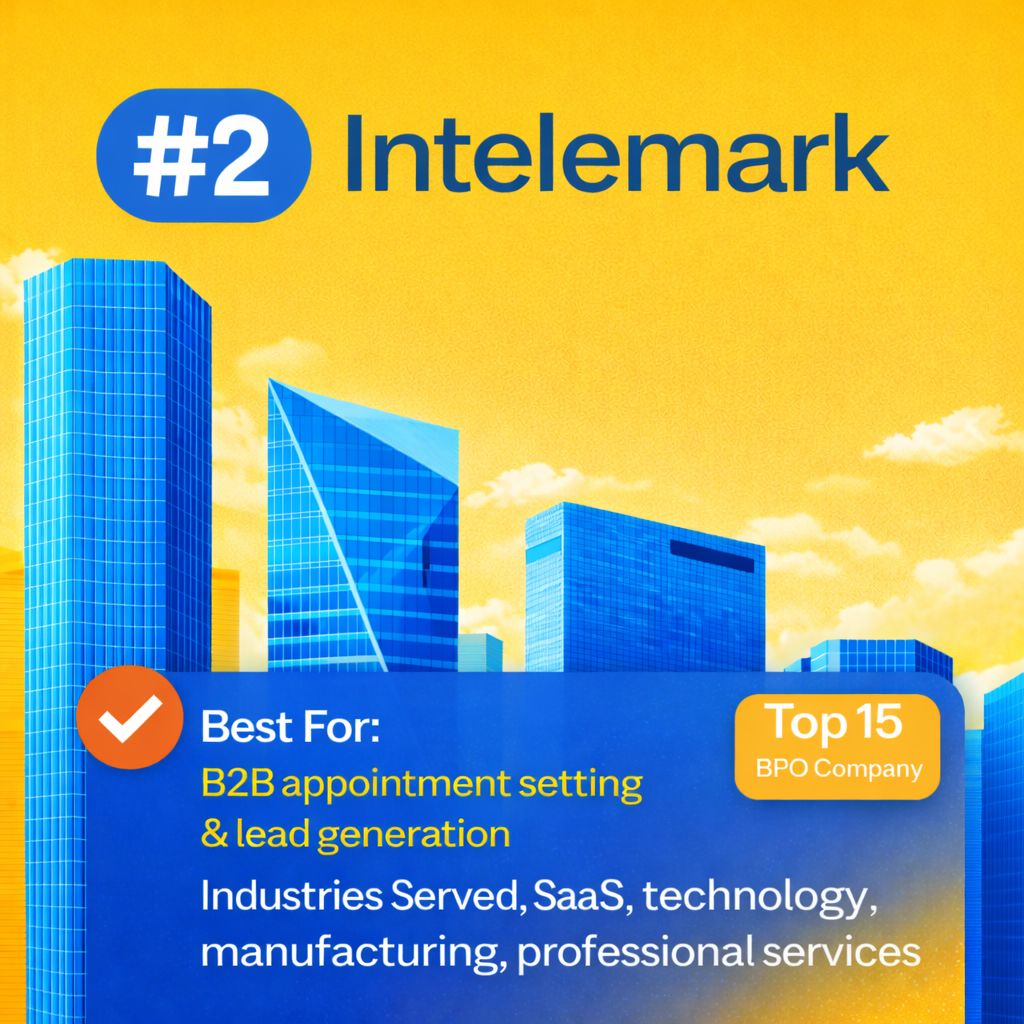
Consultative outbound calling for complex B2B sales cycles, where prospects expect an informed conversation rather than a scripted dial.
Call Motivated Sellers
Headquarters: United States
Website: callmotivatedsellers.com

Specialized outbound campaigns that identify and qualify motivated property sellers for real estate investors and acquisition teams.
The Onshore Question: When US Delivery Pays
Every US shortlist eventually arrives at the same fork: domestic delivery at domestic labor cost, or offshore economics with the distance that comes with them. The honest answer is that onshore pays in specific, identifiable situations — and is an expensive default everywhere else. The work is knowing which situation yours is.
Onshore pays first where regulation or contract requires it. Healthcare programs touching protected health information, financial services under state and federal examination, government and public-sector work, and any contract whose enterprise customers imposed data-residency terms — these are not cost decisions, and treating them as one creates exposure no rate saving covers. If your counsel has not yet told you where your data may be processed, that answer comes before any provider conversation.
It pays second where the conversation itself is the product. Retention saves, complex claims, high-value B2B accounts, crisis lines: interactions where cultural fluency, idiom and judgment decide outcomes measured in revenue rather than handle time. The premium for a US agent on a password reset buys nothing; the same premium on a save call that keeps a four-figure annual account is the cheapest money in the program.
The compliance layer is heavier onshore than buyers expect, and it is a reason to choose providers carefully rather than a reason to avoid the market. Outbound work runs under TCPA, the national Do Not Call registry and state calling-hour rules, with statutory damages that accumulate per call; recording consent varies by state, and a grown list of state privacy acts adds notice and access obligations. A US provider's fluency in these rules — unprompted, specific, current — is one of the sharpest available tests of whether it actually runs the regulated programs its references claim.
The arithmetic that decides the fork is cost per resolved contact, not cost per hour. US delivery carries a higher rate and, on programs suited to it, frequently a higher first-contact resolution, fewer repeat contacts and fewer escalations — which narrows the gap the rate implies. Run the comparison on ninety days of your own contact mix: rate times hours divided by contacts actually resolved, both models. Sometimes offshore wins decisively. The point is to find out with your queue, not the industry's averages.
Choosing the Right Call Center Partner
For a US organization, the shortlist question is delivery model first: does this line of business need US-based agents, or does near-shore or blended delivery serve customers just as well at better economics?
Providers on this list cover the full spectrum — US-only onshore specialists, Canadian near-shore operators with full time-zone overlap, and global players with blended options. Compare them through a structured RFP and a pilot before committing volume.
Global Empire Corporation supports US organizations with onshore and blended call center programs across customer care, technical support, sales, and lead generation.
Frequently asked questions
Should a US company choose onshore or offshore call center outsourcing?
It depends on the line of business. Regulated, complex, or brand-critical calls usually justify US-based or near-shore agents; high-volume transactional support often works offshore. Many US programs blend both and route by call type.
Which compliance standards matter for US call center programs?
Commonly HIPAA for healthcare, PCI DSS for payments, SOC 2 for data handling, and TCPA/DNC rules for any outbound calling. Confirm the provider's certifications and ask how compliance is audited in practice, not just claimed.
Is near-shore delivery from Canada a good fit for US programs?
Often, yes. Canadian centers offer full US time-zone overlap, strong English fluency and cultural alignment, and better economics than most onshore US delivery — a practical middle ground when fully domestic agents aren't required.
How quickly can an outsourced US call center program launch?
A focused campaign with a trained provider can launch in weeks; complex omnichannel programs with system integrations take longer. Ramp speed depends mostly on how quickly you can provide training material, system access, and a clear quality definition.
Are all companies on this list US-based?
No — the list includes US onshore specialists, Canadian near-shore operators, and global providers that serve US organizations through blended delivery. Each entry notes where the provider is strongest.